When submitting visa applications, consulates of various countries— from the USA and the UK to the Schengen Area — look not only at your current documents but also at your visa history. This factor can significantly affect the likelihood of your application being approved.
A strong visa history is your asset, even if you are applying to a new country for the first time. It shows that you have traveled abroad before, returned on time, and complied with visa regulations.
Why Consulates Check Visa History
Every embassy seeks to minimize the risk that an applicant will:
- violate visa conditions;
- remain in the country illegally;
- use the visa for unauthorized purposes (for example, a tourist visa to work).
To assess reliability, officers review:
- which countries you have visited;
- on which visas;
- whether there were overstays, deportations, or violations;
- whether you have had previous refusals and for what reasons.
Therefore, when applying, it is crucial not to hide prior refusals. Read more in “Common Visa Application Mistakes”.
Positive Visa History: How It Helps
If you have already visited countries with stringent visa systems—Schengen, the USA, Canada, the UK, Japan, South Korea, etc.—this is a major advantage. Such trips demonstrate that you:
- did not violate visa rules;
- had genuine tourist or business purposes;
- returned on time and did not abuse the visa.
It is especially valued if you obtained multiple-entry visas and used them responsibly. See “Multiple-Entry Schengen Visa: Eligibility and Duration” for details.
Even trips to visa-free countries (Turkey, Georgia, Thailand, Balkan states) can play a role: they show you travel for leisure rather than seeking illegal migration routes.
A Clean Passport Is Not a Verdict
If you are applying for your first visa ever, don’t worry. Many start with a blank passport. In this case, consulates have no visa history to evaluate, so you must:
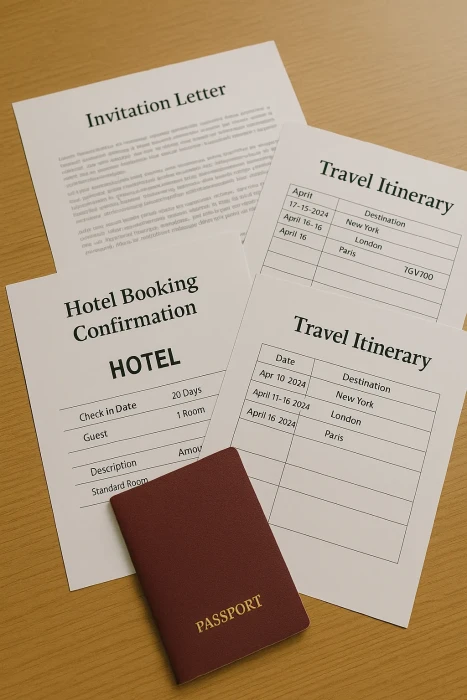
- provide a highly credible travel itinerary;
- attach financial guarantees (see “Financial Guarantees: How to Prove Your Solvency”);
- emphasize ties to your home country—employment, family, studies (see “How Employment and Family Status Affect Visa Approval”);
- properly book flights and hotels;
- if needed, include a letter of invitation from your host.
Tip: If you plan to apply later to a country with strict visa rules (e.g., the USA, Canada, or the UK) and have no prior visas, start by obtaining a Schengen visa or visiting visa-free destinations—this boosts your credibility.
Negative History: Consequences
If your passport contains:
- deportation marks;
- expired visas;
- visa refusals (especially multiple);
- stamps indicating overstay beyond permitted time;
— this negatively affects new applications. Visa officers may interpret such information as a risk of repeat violations.
However, you can address this by:
- never hiding a refusal— it can be easily checked;
- preparing an explanatory letter detailing reasons (e.g., misunderstanding, illness, missed return flight, etc.);
- providing additional documentation to prove the situation won’t recur;
- seeking professional assistance— a visa expert consultation can improve your chances.
Building a Positive Visa History
If you are just starting but plan important trips in the future, consider these steps:
5 Steps to Build Your Visa History:
- Start with Schengen— despite requirements, this visa is considered both accessible and prestigious.
- Visit visa-free countries— trips to Turkey, Egypt, the UAE, etc., also reflect in your passport.
- Comply with all dates— depart before your visa expires.
- Keep old passports— even expired ones can serve as proof of past visas.
- Organize your documents carefully— especially if you plan to apply to the USA or the UK, where trust in the applicant is critical.
Conclusion
Your visa history is your calling card in the world of international travel. The cleaner, broader, and more compelling it is, the higher your chances of securing new visas. Even if you start from scratch, a smart approach, a complete set of documents, and understanding consular requirements can help you succeed on the first try.
If you have had refusals, violations, or other complications—don’t give up. Reapplying is normal, not exceptional. The key is to understand the reasons and prepare thoroughly. Read more in “Reapplying After a Visa Refusal: Key Considerations”.