Obtaining a visa to the USA, the United Kingdom, Canada, the Schengen Area, and other countries is a process that requires attention to detail and precision. Despite its apparent simplicity, thousands of applicants receive a refusal each year due to common visa application mistakes. In this article, we will review the most widespread errors applicants make and advise how to avoid them to increase your chances of a successful visa approval.
Why Refusals Occur: Introduction to the Issue
The primary reason for refusals lies not so much in the applicant’s ineligibility but in procedural violations. A missing certificate, an error on the form, an unsuitable photo — and the result is a refusal, wasted time, and money. Even if you are applying for a tourist visa to Canada or a visitor visa to the Schengen Area, the slightest inaccuracy can play a decisive role.
To avoid this, it is important to know and understand which mistakes occur most often.
Mistake #1 – Incomplete Document Package
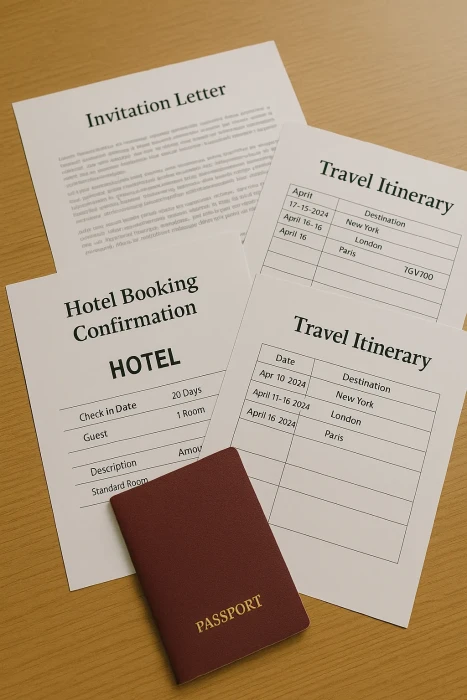
This is one of the most common and at the same time easily correctable errors. Applicants often forget to include:
- copies of their passport,
- documents confirming the purpose of the trip,
- employment or bank certificates,
- an insurance policy (for the Schengen Area),
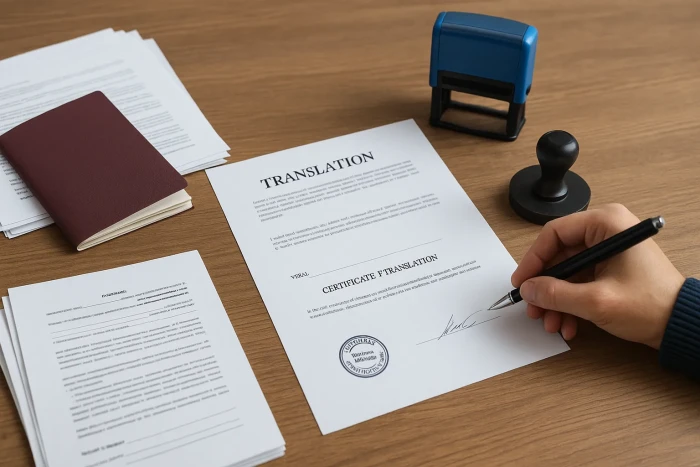
- or fail to account for translation requirements.
An incomplete package raises suspicions with the visa officer and automatically reduces the chances of approval.
🔹 Tip: before submitting your documents always cross-check with the visa document checklist available on our website or consult a specialist. For more details, see the article "Visa Documents: Complete List of Required Certificates".
Mistake #2 – Inaccuracies and Errors in the Application Form
Even a minor error in the application form is a potential ground for refusal. The following are at high risk:
- typos in your name or date of birth,
- discrepancies with data in your passport,
- providing false or contradictory information,
- incorrectly specifying travel dates.
This is especially critical when applying for student visas to the UK or business visas to the USA, where forms are processed automatically and discrepancies may be seen as intentional misrepresentation.
🔹 Tip: use only data from your passport and other official documents. Before submitting the application, carefully review every field.
Mistake #3 – Insufficient Financial Guarantees
The consulates of many countries strictly verify that the applicant has the means to financially support their trip. Refusals often occur due to:
- lack of a bank statement,
- unverified income,
- unclear employment certificates,
- listing a sponsor without documentary proof.
This is especially relevant when applying for visas to Australia, Canada, or Japan, where full proof of solvency is required.
🔹 Tip: provide as many supporting documents as possible. Learn more in the article "Financial Guarantees for Visa Applications" — where we collected recommendations for preparing statements, certificates, and confirmations.
Mistake #4 – Non-compliant Photographs
It may seem trivial, but an improper photograph is one of the most frequent reasons for document returns. Common errors include:
- incorrect size (e.g., 3×4 cm instead of the required 5×5 cm),
- non-uniform background,
- using outdated photos,
- head coverings or shadows on the face,
- incorrect digital file format.
The embassies of the USA and the UK are particularly strict about photographs.
🔹 Tip: have your photo taken only at professional studios familiar with the specific country requirements. You can clarify standards in the article "Visa Photo Requirements: Rules and Examples".
How to Avoid Mistakes Before Submission
Before final submission of documents, check that:
- All documents are present and in the correct format;
- The application form is filled out correctly;
- Hotel and ticket bookings are up to date;
- Financial documents are attached;
- Photographs comply with requirements;
- You selected the correct visa category (tourist, student, etc.).
If you are not sure — seek professional visa application assistance. We will not only advise you which documents to collect but also review every detail before submission.
Conclusion
Errors when applying for a visa are not a sentence but can delay your trip or cost you money. To avoid a refusal, it is important to study all requirements in advance, prepare the documents, and review the application 100%.
We offer visa application assistance for the USA, Canada, the UK, Australia, Japan, China, and Schengen Area countries. By working with us, you gain not only support but also confidence in the result.