












Australia – the dream of many travelers. Its unique nature, “reversed” seasons and unparalleled culture draw people from all over the world. However, obtaining a visa to Australia is not an easy task: in terms of refusal rates it is comparable to the UK visa. Australia’s visa policy is strict about any mistakes or inaccuracies, and the consular verdict can sometimes be subjective. In other words, the applicant must provide documentary proof that they do not intend to overstay.
If you are facing an Australian visa for the first time, be prepared for a long and challenging journey. You will have to navigate document checklists, contradictory sources of information, and fill out a confusing questionnaire in English. Uncertainty in your own abilities is a good reason to entrust the matter to experts. Our team specializes in complex visa cases: we take on all the routine work, saving you time and stress. Opening the world — without borders or refusals.
Reasons for Australian Visa Refusal
Even small details can lead to refusal. Most errors occur at the stages of choosing the visa type and preparing documents. Choosing the wrong visa category is guaranteed to result in refusal if the purpose of your trip does not match the visa category. In addition, you must provide exhaustive proof of non-immigrant intentions: employment references, previous passports with visas, invitations from relatives, etc. Incomplete document package or lack of translations can also result in refusal. Remember that the application must be submitted only in English, and any inaccuracies or contradictions in your answers can work against you. In the end, every field in the form and every supporting document should convincingly demonstrate that you have strong ties to your home country and sufficient resources for your trip.
Common reasons for refusal include: insufficient financial means for the trip, lack of proof of accommodation (hotel booking or invitation), and weak justification for return (unconvincing information about work, family, or property). Even a blank passport is not grounds for refusal if everything is prepared correctly. You need to show stable income, savings in your bank account to cover expenses, and “anchors” at home (job, property, family). We help identify the strong points of your situation and highlight them in your application to reduce the risk of refusal.
Types of Visas to Australia
Decide on the purpose of your trip – this determines the choice of visa and the success of the entire undertaking. Australian visas are divided into immigrant and non-immigrant categories. Below we review the main non-immigrant visas to Australia for tourism, business trips, studies, or visiting relatives:
Tourist Visa
Tourist Visa is intended for short-term vacations and sightseeing in Australia. It does not allow studying for more than 3 months or working; the visit is purely for tourism. Typically, the Visitor visa (subclass 600 Tourist stream) is issued to Ukrainians, Russians, and other CIS citizens for 3, 6, or 12 months depending on the application and the consulate’s decision. Usually it can be single-entry or multiple-entry, with the exact validity period determined by the consulate based on your application. It cannot be extended – for a longer stay you must apply again.
Sponsor (Family) Visa
Sponsor (Family) Visa (Visitor visa – Sponsored Family stream) is suitable if you plan to visit relatives or friends in Australia. The main difference is the requirement of an official invitation from the host (a close relative or friend residing permanently in Australia). The host usually provides a letter and may submit documents confirming their status in the country. This visa is typically granted for up to one year, but its purpose is strictly for visiting family. The consulate will carefully verify the authenticity of the family relationship and your intention to return on time. If you have an Australian citizen relative, you can apply under the tourist stream by indicating your relation – a separate family sponsorship visa is not required.
Business Visa
Business Visa is intended for short-term business trips: attending conferences, negotiations, exhibitions, or exchanges. It does not grant the right to work or conduct commercial activities in Australia. It is usually processed as a business stream of the Visitor visa. The applicant must justify the business purpose: event invitation, conference registration, or a letter from an Australian company or partner. The validity period, as with tourist visas, is usually 3–12 months with short stays. Despite its business nature, you must prove you will not stay beyond the event.
Student Visa
Student Visa is required for those planning long-term studies in Australia – at a university, college, language school, or other course. This visa falls under a separate category (Student visa, subclass 500) and is issued for the duration of the course plus a short buffer. You must provide Confirmation of Enrolment, pay at least the first tuition installment, and meet financial requirements. The student visa allows full-course study and usually permits work up to 48 hours per fortnight. It is important to show you are going to study, not to immigrate, and that you will return home after graduation (or switch to another visa lawfully).
Work Visa
Work Visa is necessary for those with a job offer in Australia or planning employment in the country. Work visas vary: temporary (e.g., Temporary Skill Shortage subclass 482) or permanent skilled visas based on qualifications and employer sponsorship. You generally need an Australian employer sponsor and a nomination approval. Applicants must hold in-demand skills, relevant experience, English proficiency, and meet other criteria. The work visa process is more complex and lengthy than tourist visas: you need an employment contract, qualification certificates, medical examination results, and a police clearance. Our agency can advise on basic work visa questions, but final decisions and timelines lie with the Australian immigration authorities. If your goal is temporary work or professional relocation, start document preparation early and follow official requirements carefully.
Note: There are other specialized Australian visas. For example, a Transit Visa is required for short layovers (up to 72 hours) – even to leave the airport. A Maritime Crew Visa is for ship crew members docking in Australian ports. A Child Visa is issued to minors and processed like a tourist/family visa but requires parental consent. If traveling with or sending a minor alone, ensure all necessary permissions and documents are in order.
Requirements and Documents for the Visa
Documents are the key factor in Australian visa consideration, since there is usually no in-person interview. The list of required papers varies by visa type and applicant situation, so always check the official website or consult our specialists for the latest requirements. Below are the main documents typically required for the Visitor visa categories:
- Passport: original and copies of all used pages. The passport must be valid for at least 6 months after your planned return.
- Application Form: completed online in English via the ImmiAccount system. We help ensure all questions are answered correctly.
- Photograph: color photo 35x45 mm (passport-style).
- Proof of Personal Status: birth, marriage/divorce certificates, or name change documents if applicable.
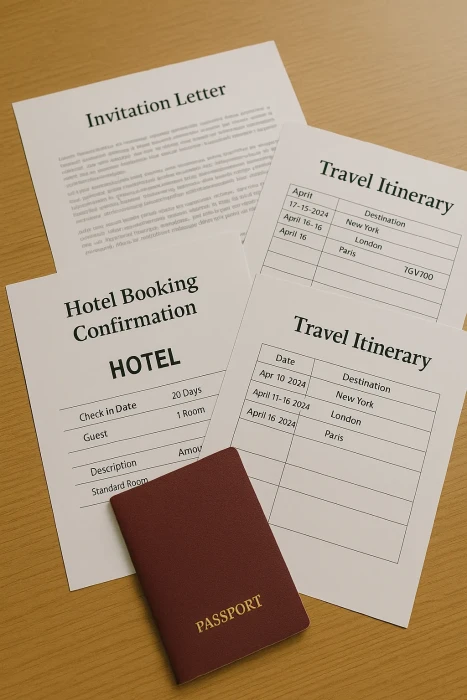
- Evidence of Purpose: flight and hotel bookings or a detailed travel itinerary. For family visas – an invitation letter from the host with address and contact details.
- Financial Guarantees: bank statements showing sufficient funds, an employment letter stating position and salary, property or business ownership documents. These prove your ability to cover expenses and your intention to return home.
- Health Insurance: required for tourist purposes. The policy must cover your entire stay.
- Supplementary Forms: additional forms may be required (e.g., family composition, military service for men) depending on your situation.
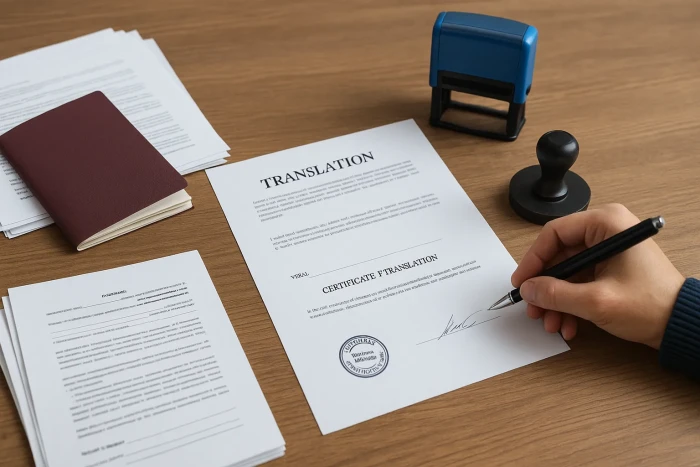
All documents in Russian, Ukrainian, or other languages must be translated into English and attached to the application. Translations should be professional quality. The passport itself does not require translation. Remember, missing documents or untranslated papers will delay processing or lead to refusal without a refund of fees.
Step-by-Step Application Process
Applying for an Australian visa is done online through the official Department of Home Affairs portal. The general procedure is:
- Create an ImmiAccount. Register on the Australian Department of Home Affairs portal. You will use this account to submit your application, upload documents, and track status.
- Select the Visa Type. Choose the appropriate visa category in your account. For tourists and family visits it is usually Visitor visa (subclass 600). For students – Student visa (subclass 500), for work – the relevant work visa category. We help ensure you select correctly.
- Complete the Application Form. Carefully fill out the online form in English. Provide personal details, trip purpose, itinerary, financial status, travel history, and answer truthfully. We review client applications to eliminate errors and ambiguities.
- Upload Documents. Scan and attach all required documents. Files must be readable. Upload translations together with originals in the same upload.
- Pay the Visa Fee. Pay online by credit card (Visa, MasterCard, etc.). Without payment your application will not be processed. Fees vary by visa type: for example, the Visitor visa fee in 2025 is approximately AUD 195–204. Upon successful payment you will receive confirmation.
- Biometrics (if required). Some applicants are asked to provide biometric data – fingerprints and photograph. You will receive an email with instructions on where and when to go (VFS Global center or embassy). This is mandatory: without biometrics your application will not proceed.
- Wait for a Decision. Processing times vary (visa type, workload, individual circumstances). On average tourist applications take 2 weeks to 4 months. We recommend applying at least 2 months before travel. You can monitor status in ImmiAccount. Additional information may be requested at any time; we help you respond promptly.
- Receive the Outcome. You will get an email with the decision. If approved, you will receive a Visa Grant Notice detailing conditions: validity period, maximum stay per visit, number of entries, and any restrictions (e.g., “No work”). The Australian visa is electronic; no sticker is placed in your passport – simply print the notice for travel. If refused, you will receive a letter explaining reasons. Unfortunately, the visa fee is non-refundable.
Processing Times and Urgent Requests
Official processing times for Australian visas can change and are published on the Department of Home Affairs website. For example, the Visitor visa often takes 15–45 days, though half of applications may exceed this timeframe. If you have imminent travel, apply well in advance.
In urgent cases (emergency travel for compelling reasons) you can request priority processing. You must have a serious justification: sudden illness or funeral of a relative, urgent business event, start of studies in the coming weeks, etc. Explain your urgency in the form and cover letter, and provide supporting documents (e.g., medical certificate, conference invitation). The consulate may expedite at its discretion, but there are no guarantees.
Note that it is best to book flights and hotels only after visa approval or choose refundable rates. The Australian consulate explicitly advises against non-refundable commitments before visa issuance to avoid financial loss in case of delays or refusal.
Tips for a Successful Application
Getting an Australian visa is complex but achievable. Our experience offers several key tips to boost your chances:
- Choose the correct visa type. Your trip purpose must fully match the visa category. If in doubt, consult experts to avoid rejections on the first application.
- Compile a complete document package. It’s better to include more evidence than miss something important. Double-check official checklists and add supplementary documents (employment, bank statements, property ownership) – extra proof never hurts.
- Translate all documents into English. Even excellent documents are useless if the officer cannot read them. Professional translations are mandatory for all documents except the passport. Unofficial translations are acceptable but certified translations are preferred.
- Demonstrate ties to your home country. The officer should not suspect immigrant intent. Provide an employment letter preserving your position, family certificates, property deeds or business documents. Previous foreign trips and visas in old passports are a plus – they show you returned as required.
- Fill out the form carefully. Any error or contradiction can cause refusal. Answer truthfully and precisely. If unsure about English or a question’s meaning, seek help. We review client forms to eliminate ambiguity and mistakes.
- Apply early. The earlier you submit, the better. Ideally 2–3 months before travel. This leaves time for medical exams or additional document requests. Peak seasons extend processing times, so plan accordingly.
- Use professional support. Immigration rules change and official language can be confusing. Consulting experts saves time and effort. We stay updated on embassy requirements to help clients avoid common pitfalls.
Why Choose Us for Your Visa Application?
We are a professional visa agency with years of experience. Our team has completed hundreds of successful Australian visa cases for tourists, students, business people, and families. By working with us, you entrust your application to experts who know every detail and potential issue. Our agency offers:
- 🎯 A personal manager for each case. Individual approach and constant communication with your specialist.
- 📌 20+ years of experience and thousands of visas approved. Extensive expertise with complex cases and an impeccable reputation.
- 📅 Up-to-date embassy information. We are the first to learn about changes in visa rules, sparing clients outdated advice.
- ⚠️ Handling refusals and complex situations. We take on cases with prior refusals, correct mistakes, and improve chances on reapplication.
- 🖊️ Professional form completion. Your forms and documents will be error-free and compliant with all standards.
- 🔐 Confidentiality and secure communication channels. Your personal data is protected; we use only verified transmission methods.
- 💬 Support at every stage from application to visa grant. We advise, prepare you for possible interviews (though none are required for Australia), track results, and stay by your side until your departure.
We are genuinely invested in your success. Our mission is to make the visa process as transparent and effective as possible. If you dream of Australia, we will do everything to make that dream a reality without unnecessary borders or refusals.