Proof of financial means is one of the key elements when submitting a visa application. Consulates of various countries require assurance that the applicant can cover travel and accommodation expenses and will not remain illegally after the visa expires. In this article, we’ll explain which financial documents you need to provide, how to prepare them correctly, and which mistakes most often lead to refusal.
Why financial guarantees are needed
The main purpose of financial guarantees is to convince the visa officer that you:
- can pay for your flight, lodging, meals, and other expenses;
- do not intend to work illegally or immigrate;
- will return home at the end of your trip.
Specific sums and document requirements depend on visa type (tourist, student, visitor, business) and destination country. See details on the Canada visa page, the Australia visa section, and other country pages for minimum budget requirements.
Bank statement: how to prepare it correctly
A bank statement is the primary document proving you have sufficient funds. To meet requirements, ensure:
- The statement is on the bank’s letterhead and, if required, bears an official stamp;
- It covers the last 3–6 months;
- It shows your current account balance, not just transactions;
- The amount covers your entire stay. For Schengen countries, calculate at least €50–70 per day per person plus travel and lodging costs.
🔹 For a full list of required documents, see “Complete Visa Document Checklist” to ensure nothing is missing.
Employment letter as proof of steady income
An additional proof of your financial stability is an employment letter stating:
- job title;
- length of employment;
- monthly salary;
- confirmation that your job will be held for you during your trip.
This letter not only demonstrates financial stability but also your ties to home, reducing immigration concerns.
Sponsor letter: when personal funds are insufficient
If the applicant’s own funds are insufficient, a sponsor letter may be used. This is common for:
- students;
- minors;
- those without formal employment.
A sponsor can be:
- a parent;
- a spouse;
- an employer or relative.
The letter must include:
- pledge to cover expenses;
- sponsor’s full name, contact details, relationship to you;
- trip dates and purpose.
Attach the sponsor’s financial documents: bank statement, income certificate, passport copy, and, if needed, proof of relationship.
Additional proofs of financial means
Consulates also appreciate secondary evidence, though not always mandatory:
- property ownership documents;
- vehicle registration;
- business ownership;
- investment statements.
Moreover, a strong visa history (previous visas, travel to advanced countries, no immigration violations) further bolsters your credibility. See “Why Visa History Matters”.
Common mistakes with financial documents
These frequent errors can cause visa refusal:
- Outdated statements. A three-year-old bank statement is not valid.
- Forged documents. Zero tolerance—leads to lifetime ban.
- Insufficient funds. Even if you can pay, consulates apply minimum thresholds.
- Inconsistent data. Mismatched salary in application vs. letter raises red flags.
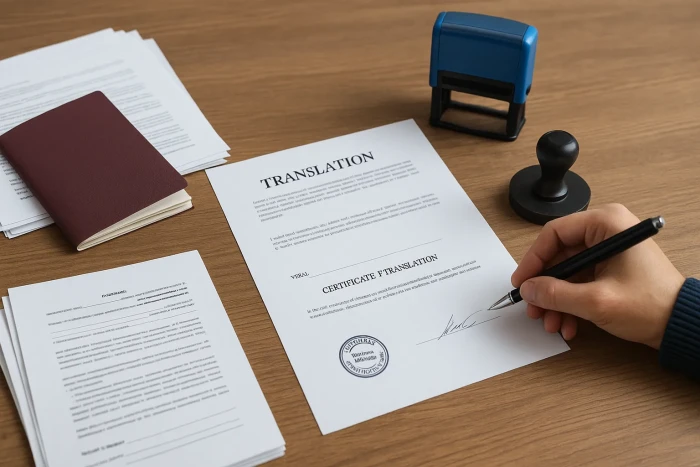
- No translation. Non-English or non-official-language documents require certified translation.
🔹 For translation guidelines, see “Visa Document Translation”.
Conclusion
Financial guarantees are vital to your visa application. Even a flawless application can fail without proof of funds. Be honest, gather up-to-date documents, translate them, and submit them with your application.
We offer visa assistance for the USA, UK, Canada, Australia, Japan, China, and Schengen. Our experts will help you prepare bank statements, letters, sponsor forms, and translations to ensure you meet all financial requirements.