What Does Visa Validity and Duration of Stay Mean?
Many applicants confuse the concepts of “visa validity” (Validity) and “permitted duration of stay” (Duration of stay). These are key parameters that define when you can enter the country and how long you can remain there. In addition, it is equally important to consider the number of permitted entries: Single, Double, or Multiple.
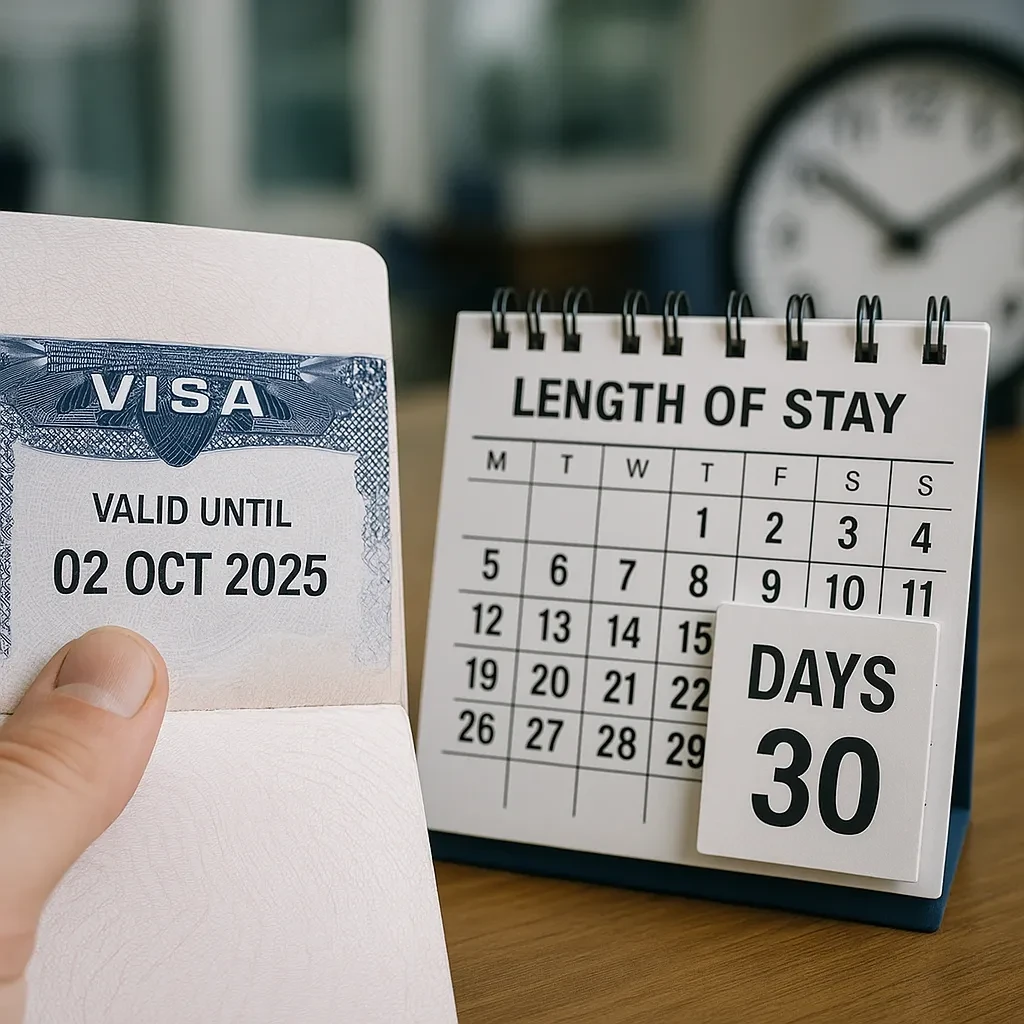
Visa validity — is the time period during which you are allowed to enter the country. Duration of stay — is the number of days you are permitted to remain in the country during one or multiple visits.
Example: Schengen Multiple-Entry Visa
One of the most common examples is a Schengen multiple-entry visa indicating “MULT 90/180.” This means:
- The visa is issued for 1 year.
- You can enter an unlimited number of times (MULT).
- However, in total you may stay in the Schengen Area for no more than 90 days in any 180-day period.
Thus, it does not give you the right to live in Europe for the entire year. For example: if you stay in the Schengen Area for 90 consecutive days, you must leave and spend the next 90 days outside before returning.
You can read more about this rule on the Schengen page and in the article “Multiple-Entry Schengen Visa”.
Example: U.S. Visa
A U.S. visa may have a validity of 3 or 5 years, but this does not mean you can live there continuously for that time. At the border, the officer determines how long you may stay. Usually a period of up to 6 months is granted, and this is stamped in your passport. Exceeding that period is a violation of visa rules.
Single-Entry Visas: Be Careful
If your visa indicates Single Entry, it means you may use it only once. Even if the visa validity is 3 months, once you leave after one week you cannot re-enter. The visa is then considered used. The same applies to Double Entry — two entries and that’s it.
Before traveling, always check the "Entries" field on your visa.
Can You Extend the Duration of Stay?
In most cases — no. Extensions are allowed only in exceptional circumstances (illness, emergencies, etc.), and the process is complex and costly.
If you plan a long trip, it is better to apply in advance for a visa covering the required period or adjust your travel dates. For more on next steps after obtaining a visa and extension options — see the article “What to Do After Getting a Visa”.
Overstaying: Serious Consequences
If you exceed the permitted duration of stay:
- You may be deported.
- Your current visa may be canceled.
- In the future, you may face a visa refusal.
This is especially relevant for countries with strict visa control such as the USA, Canada, Australia, and Schengen states. Therefore, always leave on time.
Country-Specific Features
- In the USA and Canada, the duration of stay is set by the border officer at each entry. The period is stamped and may vary even with the same visa.
- In the Schengen Area, the 90/180 rule is fixed and does not depend on the officer’s decision.
Track the stamps in your passport and count your days of stay — this helps avoid problems.
Knowing the difference between visa validity and duration of stay is key to successful international travel. Contact our specialists for advice to avoid mistakes and prevent refusals or cancellations. We also recommend reviewing the Schengen and US Visa pages and the articles “Multiple-Entry Schengen Visa” and “What to Do After Getting a Visa” for more complete information.