Getting a visa is a nerve-wracking process, especially while awaiting the decision. Once you submit your documents, many questions arise: how to check if your passport is ready, when you can collect it, and what to do after you receive your visa? In this article, we’ll explain in detail how to track your visa application status, what to do after your visa is approved, and which details to watch out for to avoid any issues.
How to check your visa application status
One of the most common questions applicants ask is how to monitor the readiness of their visa. There are several methods, depending on the country and how you applied:
1. Via the visa center
If you applied through a visa center (e.g., VFS Global or TLScontact), you receive a tracking number when you submit your documents. Use this number on the center’s website to track status. You’ll receive an SMS or email notification once your passport is ready.
2. On the consulate’s website
Certain countries offer online services where you can check your application status by entering your application number or barcode. For example, the USA, Canada, and UK each have their own trackers.
3. By calling the call center
If the online service is down or unavailable, you can call the visa center or consular office where you applied. Have your passport and application number ready.
🔹 If you've waited an unusually long time without an update, see our article "What to Do After a Visa Refusal" for possible reasons and next steps.
How long to wait: processing times
Processing times vary by country and visa type. Here are approximate timelines for popular destinations:
- Schengen visa — 10–15 business days (often quicker);
- USA — depends on interview date and consulate workload, usually 5–15 days post‐interview;
- UK — standard 15 working days, with expedited options available;
- Canada, Australia, Japan — 10–30 days, depending on season and visa category.
Tip: don’t panic if the standard period hasn’t passed yet. But if it has, contact the visa center to inquire.
How to collect your passport with the visa
Once your visa is ready, you’ll be notified by the visa center. Then you can:
- Pick it up in person — bring your ID to collect your passport;
- Have it couriered — if you pre‐ordered delivery, ensure you’re home on delivery day.
⚠️ Always verify you’ve received your own passport with the stapled visa sticker (or eTA confirmation, e.g., for Canada).
What to check on the issued visa
Immediately upon receipt, carefully verify:
- Name spelling — matches your passport;
- Validity dates — correct start/end dates;
- Number of entries — single, double, or multiple;
- Visa category — tourist, visitor, etc.;
- Geographic scope — especially for Schengen multiple‐entry visas.
If you spot an error, immediately contact the visa center or consulate. Visa mistakes can lead to denial at the border or airline check‐in issues.
Preparation for travel after visa issuance
Having the visa in hand isn’t the final step. Be sure to:
1. Book your tickets (if you haven’t already)
Now you can confidently reserve flights, hotels, and transfers.
2. Gather travel documents
Even with a visa, carry:
- Medical insurance (mandatory for Schengen — see "Medical Insurance for Visas & Travel");
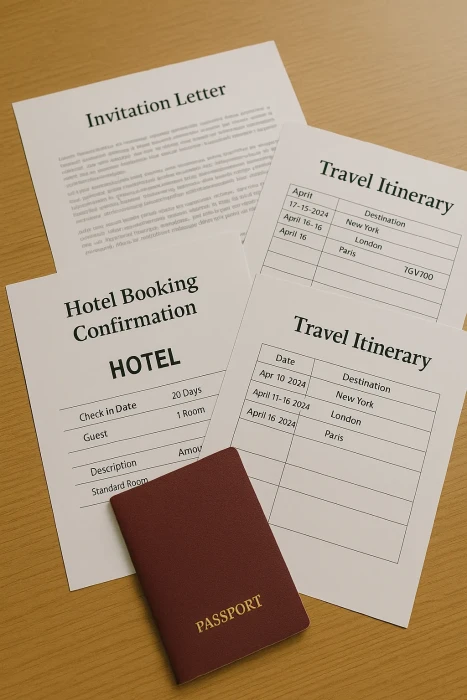
- Invitation or detailed itinerary;
- Return tickets;
- Financial proofs — bank statements or employment letter, especially for first‐time travelers.
3. Check entry requirements
Some countries require:
- Local registration (e.g., in the Schengen zone for stays over 90 days);
- Notification to immigration authorities;
- Health checks or tests (rare, e.g., for Australia).
🔹 Learn more on our Schengen Visa page, which outlines registration rules and other entry requirements.
What if your trip is canceled?
If you don’t travel: you don’t need to cancel the visa, but note:
- An unused visa doesn’t obligate travel, but if you reapply later having never used it, questions may arise;
- Tourist visas usually cannot be extended while abroad — you must exit and reapply;
- Exceptions include student or work visas, which may be extended or adjusted.
Conclusion
Tracking your application status and taking the correct steps after visa issuance are crucial parts of the process. Pay attention to details, verify your visa, plan your trip in advance, and familiarize yourself with the entry rules of your destination. This will help you avoid border complications and enjoy your travels stress‐free.
🔹 If you’re still waiting on your visa, read "What to Do After a Visa Refusal" to understand possible delays.
🔹 Also visit our Schengen Visa page for information on registration requirements and long‐stay rules.