Visa refusal — an unpleasant but not uncommon episode in visa practice. It causes stress and disappointment, especially if the trip was carefully planned. But a refusal is not the end. It can and should be analyzed to improve your chances when reapplying. In this article, we explain what to do after a visa refusal, what the reasons are, and when you can submit your documents again.
Why Visa Applications Are Refused
Before taking further steps, it is important to understand why you were refused. Consulates do not always provide detailed explanations, but generally, the reasons fall into a few main categories:
- Insufficient documents or mistakes in the application;
- Doubts about the purpose of the trip;
- Weak ties to your home country (no job, family, property);
- Suspicions of immigration intent;
- Financial insufficiency;
- Previous visa regime violations.
We recommend reading the article “Common Mistakes in Visa Applications” to avoid repeating the situation.
What to Do After a Refusal
1. Clarify the Reason
If the consulate provided an official letter with an explanation, study it carefully. If possible, request further clarification. For example, in the USA they cite the section of law (214(b)) under which the decision was made.
2. Don’t Reapply Immediately
Many make the mistake of resubmitting with the same documents, hoping for a “different officer.” This rarely works. You need to change the circumstances: add evidence, adjust the itinerary, include new documents.
3. Review Your Documents
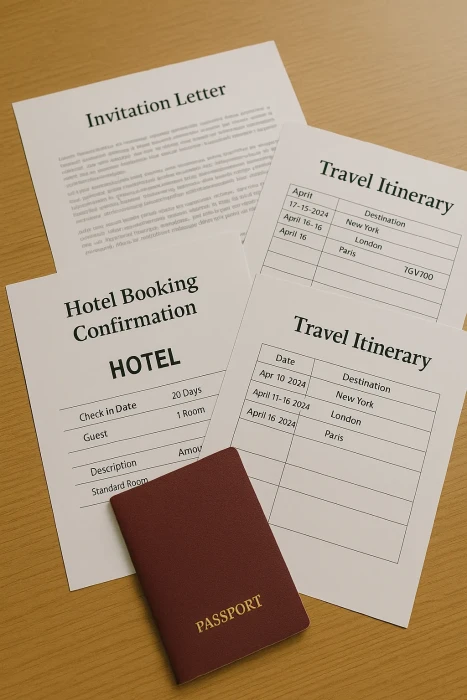
Analyze whether everything met the requirements. Were there any questionable points? For example:
- Confusion about travel dates;
- Unreliable certificates;
- No return tickets;
- Unconfirmed hotel booking.
If you need assistance, we recommend consulting experts — we can review your document package and identify weak spots.
When You Can Reapply
The timing depends on the country:
- USA: you can apply again immediately, but it’s better to wait at least 2–3 months and only if there are new circumstances;
- Schengen: you can reapply after correcting deficiencies (there is no formal waiting period, but reapplying without changes is pointless);
- Canada, UK, Australia: in most cases — after 6 months or when there are substantial changes.
For more on timing, see the article “When to Reapply After a Refusal”.
How to Improve Your Chances on Reapplication
Here are some recommendations to help convince the consulate:
- Strengthen your financial documents (bank statements, employment letters);
- Specify a different itinerary or travel dates;
- Include an invitation from a resident of the host country;
- Demonstrate strong ties to your home country: family, job, studies, property;
- Change the consulate (if possible — e.g., within the Schengen area).
A cover letter explaining what has changed since the first refusal can also help.
Learn more in the article “Financial Guarantees: How to Prove Solvency”.
Should You Consult Visa Specialists?
If refusals recur or the reasons are unclear — it’s a good idea to contact a visa agency. Experts can help you:
- Correctly interpret the reasons for refusal;
- Prepare a flawless document package;
- Draft a professional cover letter;
- Choose another country or visa type if the current path is impossible.
Alternatives and Workarounds
Sometimes it makes sense to apply for a visa from another country with more lenient conditions. For example, after a US visa refusal you might first obtain a Schengen visa, demonstrate a positive visa history, and then reapply for the USA.
More on this in the article “Easiest Visas to Obtain in 2025”.
Conclusion
Visa refusal is not a verdict. The main thing is not to panic, but to objectively assess the situation and prepare thoroughly for reapplication. Remember: reasons for refusal can be addressed, and on the second or third attempt you can very well obtain a visa, especially with professional support.
If you have faced a refusal — contact us. We will help you prepare for reapplication and increase your chances of success.