Is a Visa Required for Children?
Many parents mistakenly assume that if adults have obtained a visa, then a child can travel “automatically”. This is not the case.
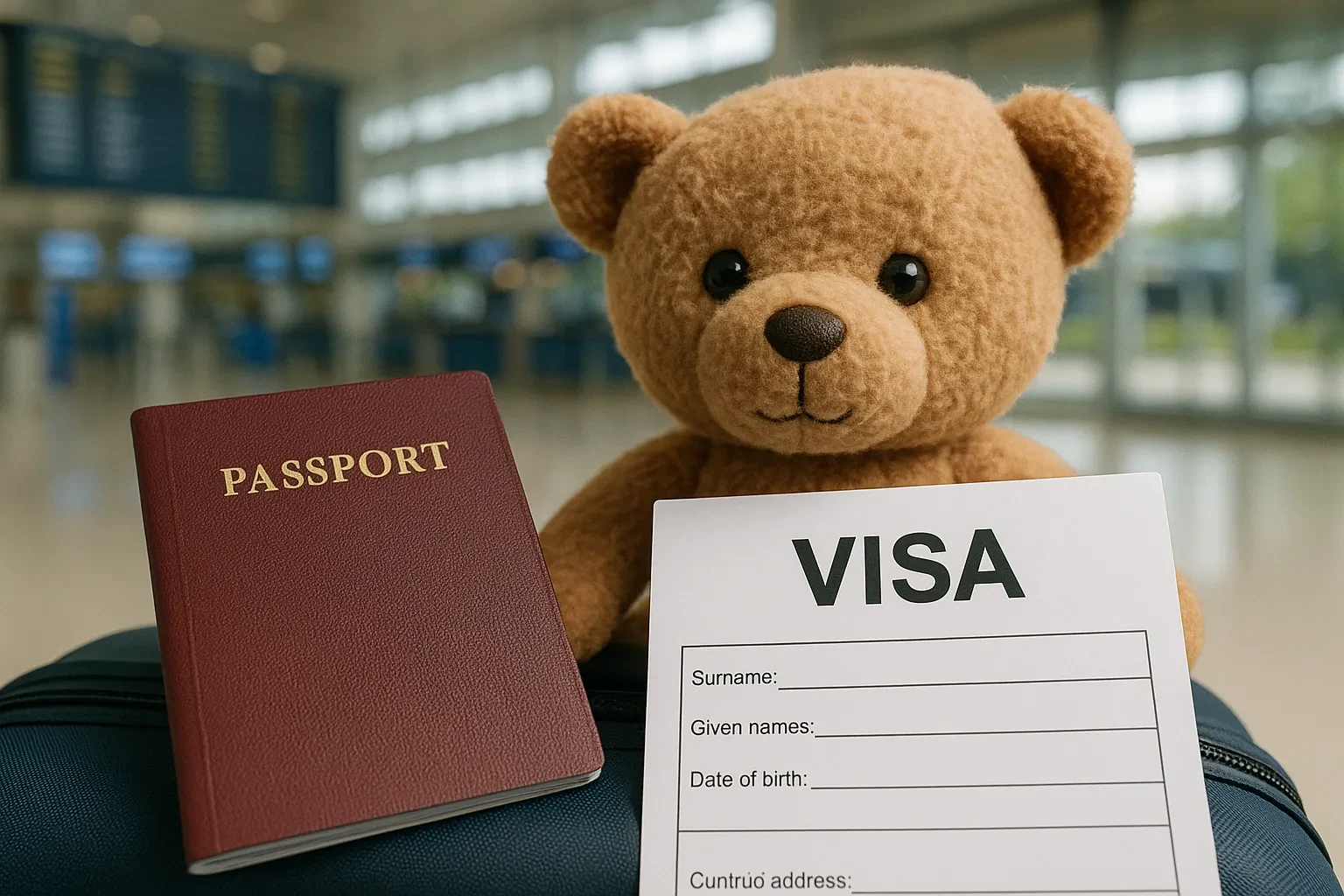
Minors are full participants in international travel, and when traveling to a country with a visa requirement, they need their own visa.
A visa may be:
- Affixed in the child’s own passport (the most common practice today)
- Affixed in a parent’s passport, if the child is included there and has no separate document (rare in 2025)
What Documents Are Required for a Child’s Visa?
In addition to the standard set (application form, photo, passport, etc.), issuing a visa for a minor requires additional documents. These confirm the relationship, parental consent, and the child’s safety during travel.
Mandatory documents:
- A copy of the birth certificate
- Notarized consent from one or both parents (depending on the situation):
- If traveling with one parent — consent from the other
- If traveling with a third party — consent from both parents
- Copies of the parents’ identity documents
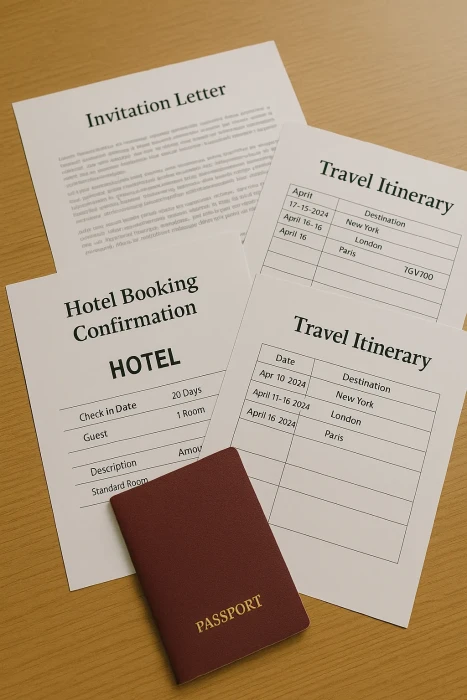
- Proof of itinerary: flight and hotel bookings
For more details, see the article “Visa Documents: Complete List”, which covers all the nuances, including those for children.
Application Form and Submission
A separate visa application form must be completed for each child, even infants. In the form:
- The child’s personal details are entered
- In fields about employment and income, the parents’ information is entered
- The form is signed by a parent or legal guardian
Most countries require the form to be signed in person by one of the parents, with supporting documents attached.
Is an Interview Required?
Interview rules for children vary by country. Generally:
- USA — children under 14 are usually exempt from a personal interview if applying with their parents
- Canada, UK, Schengen — younger children are rarely called for an interview
- In some cases, the consulate may require children over 12–14 to appear, especially if applying without parents
If in doubt, check the consulate’s website in advance or consult a visa agency.
Features of Visas for Minors
In most cases, children receive a visa for the same duration as accompanying parents. This especially applies to:
- Multiple-entry visas (Schengen multi visa, UK tourist visa, etc.)
- Family applications (when the whole family applies together)
Important! If the consent specifies the child travels only with one parent, entry and exit must occur only with them. Violating this can cause border issues.
If the trip involves visiting multiple countries, especially within the Schengen area, clearly outline your route in advance. This helps avoid extra questions. Read more in our article “Confirming Your Trip Purpose”.
Tips for Parents
Here are some practical recommendations:
- Obtain a passport for your child — simplifies both application and border crossing
- Submit applications as a family, if traveling together — increases approval chances
- Check passport validity — children’s passports often expire in 4–5 years
- Verify specific country requirements — e.g., special rules for children in the Schengen zone
Also, check our Schengen page for detailed rules on traveling with children in the EU.
Conclusion
Applying for a child’s visa is an important and responsible process, requiring attention to detail. Timely parental consent, accurate form completion, and a complete document package are keys to success.
If you don’t want to take risks, InfoVisaAgent can help you gather all documents, complete the form, and submit correctly the first time.