Studying abroad is not only prestigious but also a real opportunity to gain quality education, international experience, and new career prospects. However, the path to a student visa requires thorough preparation and understanding of every step—from selecting your program and university to the embassy interview. In this article, we’ve compiled key tips for those planning to apply for a student visa to the USA, Canada, the UK, Australia, Japan, China, or Schengen countries.
Step 1: Choose Your Program and University
The student visa process always begins with acceptance into an educational institution. Without this, you cannot apply for your visa. Different countries issue different enrollment documents:
- USA: Form I-20 (for F-1 visas);
- UK: CAS letter from your university (Tier 4 Student Visa);
- Europe: an official acceptance letter from the university or college;
- Canada: Letter of Acceptance from the school.
🔹 Tip: Choose accredited institutions enrolled in the country’s student visa program. Learn more on our USA student visa, UK student visa, and Canada student visa pages.
Step 2: Demonstrate Financial Capability
One of the main requirements for a student visa is proving you can pay for tuition and living expenses while abroad.
You generally need to provide:
- Bank statements covering the last 3–6 months in your name or your sponsor’s;
- Sponsorship letter if parents or relatives will fund your studies;
- Proof of tuition payment or deposit;
- Family income/property documents if requested.
🔹 For formatting and sample letters, see “Financial Guarantees for Visa Applications”.
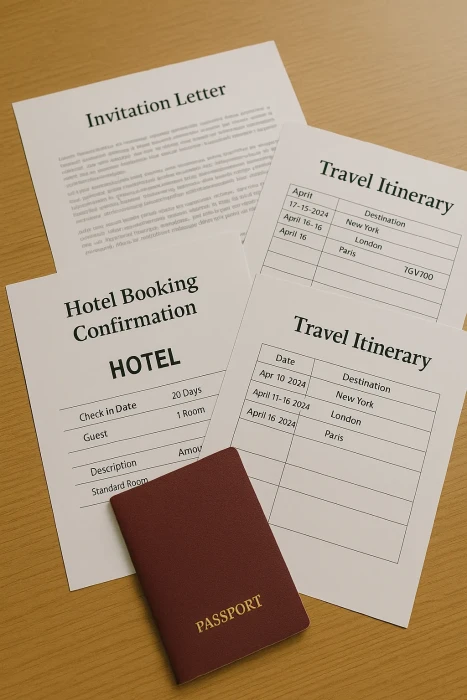
Step 3: Assemble Your Core Student Visa Documents
Typically, you’ll need:
- Passport;
- Acceptance document (I-20/CAS/Letter of Acceptance);
- Proof of tuition payment or bank funds;
- Academic transcripts/diplomas;
- Language proficiency certificates (TOEFL, IELTS, etc.);
- Health insurance valid abroad;
- Photos, application form, interview booking confirmation (if required).
🔹 Check each country’s specific checklist on its student visa page.
Step 4: Prepare for the Embassy Interview
In some countries, like the USA, an interview is mandatory for an F-1 visa. Expect questions such as:
- Why this university?
- What are your post-graduation plans?
- Who is funding your studies?
- What did you do before applying?
- Do you plan to return home?
🔹 Tip: Answer truthfully and confidently. Show genuine academic intent and your plan to return home after completing your program.
Step 5: After You Receive Your Visa
Congratulations! Next steps:
- Book your flight;
- Arrange housing if not provided by the school;
- Confirm health insurance;
- Gather academic and personal documents;
- Make copies of all visa documents in case of loss.
Upon arrival, remember to register with your institution and any required immigration authorities (e.g., NHS and Home Office in the UK). If you wish to extend or change your visa later, we can assist with extensions and status changes.
Conclusion
Securing a student visa is a vital step toward international education. Success depends on selecting the right school, compiling accurate documents, and performing well at your interview. To avoid mistakes and obtain your visa on the first try, we offer comprehensive assistance for student visas to the USA, Canada, the UK, Australia, Japan, China, and Schengen countries.
Visit each country’s page for detailed instructions, document lists, and current visa categories. And if you have any questions, our experts are ready to guide you through every step.