When applying for a visa for a private visit to relatives or friends abroad, most consulates require a letter of invitation from the host. This document plays a key role in confirming the purpose of your trip and serves as an additional guarantee for the visa officer. In this article, we will explain who needs an invitation, how to prepare it correctly, and which mistakes to avoid.
What is an invitation letter and when it is required
An invitation letter is an official or informal document confirming that the applicant has indeed been invited to a specific country for a set period. It is required for:
- a private (visitor) visa — when you stay with relatives or friends;
- a business visa — when traveling for negotiations, conferences, or business meetings (in this case, the invitation comes from a company or organization).
🔹 To understand the difference between visa categories, see "Tourist vs. Visitor Visa: What’s the Difference?".
Who can issue the invitation
Requirements vary by country, but typically the host may be:
- a citizen or legal resident of the destination country with the right to reside there;
- a legal entity — a company, educational institution, conference organizer, business partner, etc.
Important: The inviter must have legal grounds to invite a foreign national, and the consulate will verify their credentials.
What the invitation must include
To be accepted by the consulate, the invitation must contain:
1. Host’s information:
- Full name, address, and contact details;
- Status in the country (citizen/resident) — attach a copy of passport or residence permit.
2. Guest’s details:
- Full name, date of birth, passport number;
- Relationship to the host (e.g., relative, friend).
3. Trip details:
- Purpose of visit (e.g., family reunion, celebration, vacation with relatives);
- Planned entry and exit dates;
- Address where the guest will stay.
4. Additional clauses:
- Who will cover expenses (if the host is financially responsible, this must be stated);
- Signature of the inviter and date of issuance.
How to draft and send the invitation
Format depends on country rules:
- USA, UK, Canada, Australia, Schengen generally accept a free-form letter in English or the host country’s official language;
- In China, an official invitation on company or municipal letterhead may be required;
- In Germany, France, Spain, a "Verpflichtungserklärung" (formal guarantee letter) certified by the local municipality may be needed.
Best practices:
- Draft in English (unless otherwise specified);
- Notarization is optional but recommended if the host covers expenses;
- Send either the original or an emailed scan, as per consulate guidelines.
🔹 For business trips, see the UK visa page for corporate invitation requirements.
Why the invitation matters
If you state in your application that you are visiting a friend but fail to provide an invitation, a consulate may deny your visa for insufficient proof of visit purpose. Officers evaluate both documents and itinerary logic. Lack of invitation can look like concealing the real reason for travel.
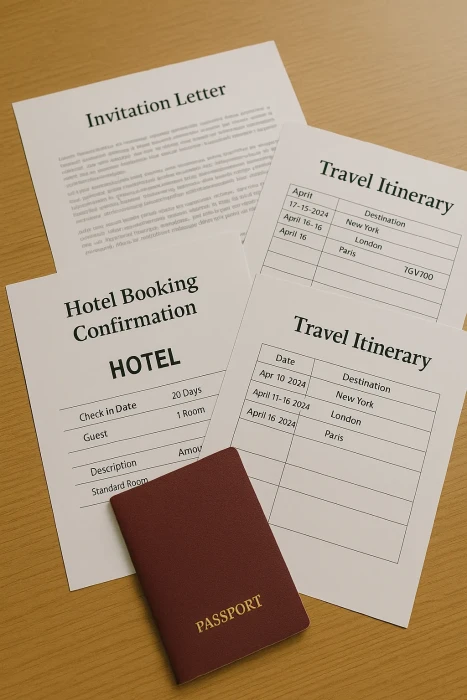
If your purpose is purely tourism, no invitation is needed—but you must provide hotel bookings, tickets, and an itinerary.
Conclusion
An invitation letter is an informal but crucial document that substantiates your travel purpose. It is especially vital for visitor and business visas, determining application success. Follow formal requirements: include all key data, format correctly, and send on time.
We assist with US, UK, Canada, Australia, Japan, China, and Schengen visas, including drafting invitations, translations, reviewing wording, and attaching supplemental documents.