Medical Documents: Are They Required for a Visa?
Many travelers wonder: is it necessary to provide medical documents when applying for a visa? In most cases, especially for a tourist visa, medical certificates or vaccinations are not required.
However, there are exceptions. Some countries and visa categories may require certain medical examinations, vaccinations, or even a chest X-ray. This is especially true for long-term visas, student programs, and immigration.
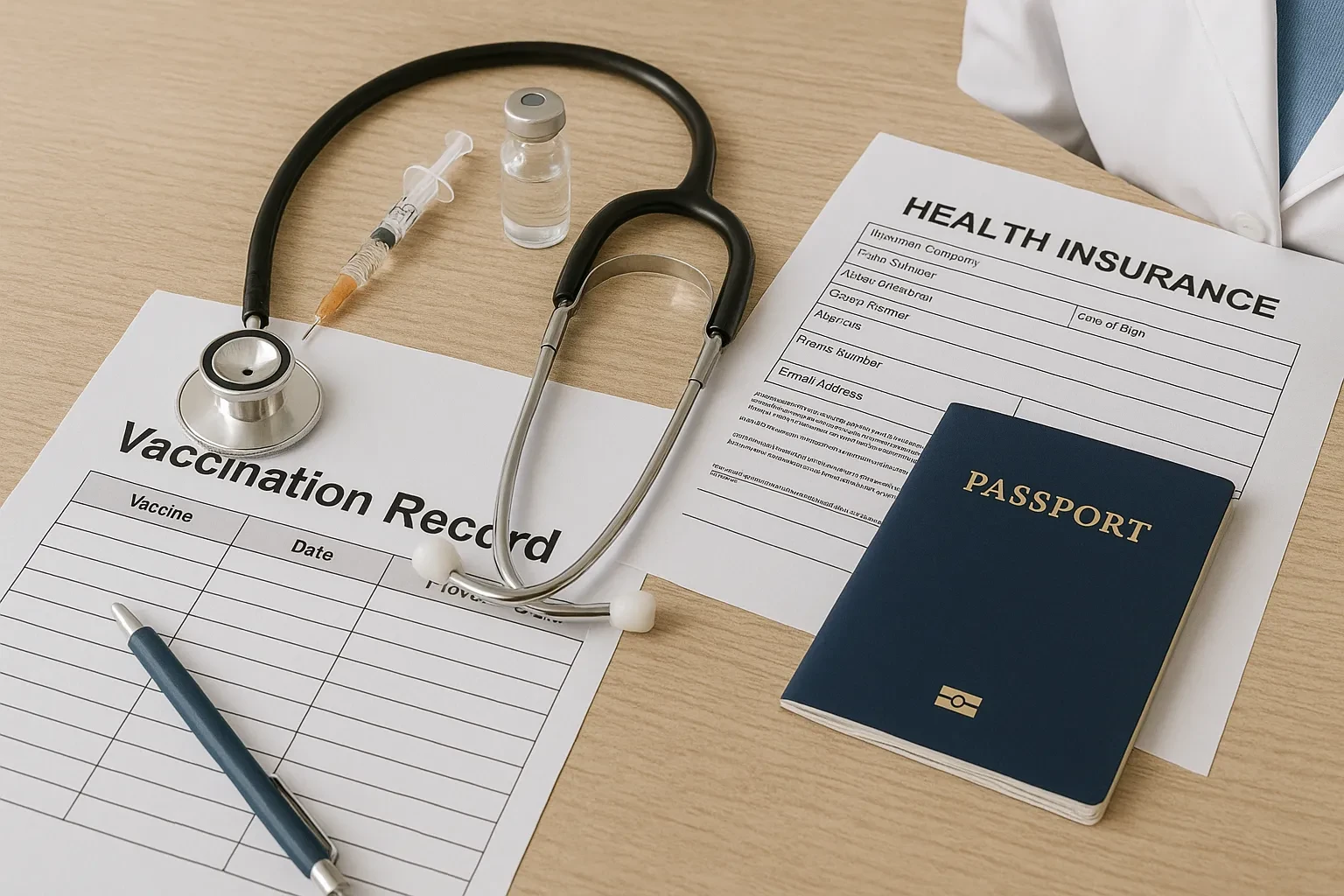
Vaccinations and Certificates: When Are They Required
For short-term trips, medical vaccinations are usually not mandatory. However, for stays over six months or for immigration, you may need:
- USA — require vaccinations only for immigrant visas. Not required for tourists.
- Australia — may require a tuberculosis X-ray for students, workers, and other applicants if the stay exceeds six months.
- Canada — sometimes requests a medical exam for students, caregivers, and other categories, especially from high-TB-risk countries.
- Japan, China, Schengen — generally do not require vaccination certificates.
For travel to exotic countries (e.g., Tanzania, Brazil), the consulate may request a yellow fever vaccination certificate. This can also apply to transit through such countries.
If you are applying to one of these countries, be sure to check the “Australia” or “Canada” sections on our site — we detail when a medical exam may be required.
COVID-19 Requirements: Still Relevant in 2025?
As of 2025, most countries have lifted COVID restrictions and do not require vaccination certificates or PCR tests. However, some countries, especially in Asia (e.g., China), may introduce temporary rules based on the epidemiological situation.
Before applying, we recommend:
- Checking current COVID entry rules
- Confirming if a vaccination certificate or PCR test is needed
- Contacting the consulate or visa center
Medical Examination for a Visa: When Is It Mandatory?
A medical exam may be required for:
- U.S. immigrant visas — conducted at an accredited clinic
- Work visas in Canada or Australia — especially for healthcare workers or those working with children
- Student visas in Australia or New Zealand — may require a tuberculosis test
The consulate will usually refer you to an approved clinic. Undergoing the exam “in advance” is unnecessary.
Read more about these visas in the article “Visa to Australia” — it specifies when a medical certificate or X-ray may be needed.
Health Insurance: Almost Always Required
Even if certificates and vaccinations are not mandatory, nearly all countries require health insurance for the duration of your trip. This is particularly true for:
- Schengen Area — minimum coverage of €30,000
- Canada, UK, USA — recommended policy covering outpatient and inpatient care
- Australia, Japan, China — insurance is not always mandatory but strongly recommended
For more on insurance, see our article “Health Insurance for a Visa” — it explains how to choose a policy, which risks to cover, and how to avoid refusal due to inadequate insurance.
Traveler Tips
Before your trip, we recommend:
- Checking the epidemiological situation in your destination
- Getting vaccinations for hepatitis A, typhoid, diphtheria — especially for developing regions
- Carrying vaccination certificates — even if not required, they can be useful
- Following the consulate’s instructions — if a medical exam is needed, they will refer you
Summary: What Really Matters
In most cases, for a visa you need to:
- Arrange appropriate health insurance
- Undergo a medical exam only if the consulate explicitly requires it
- Check for any current COVID or vaccination requirements
Always verify information on official sites or with consultants. At InfoVisaAgent, we constantly monitor changes and will advise you on exactly what you need for your case.