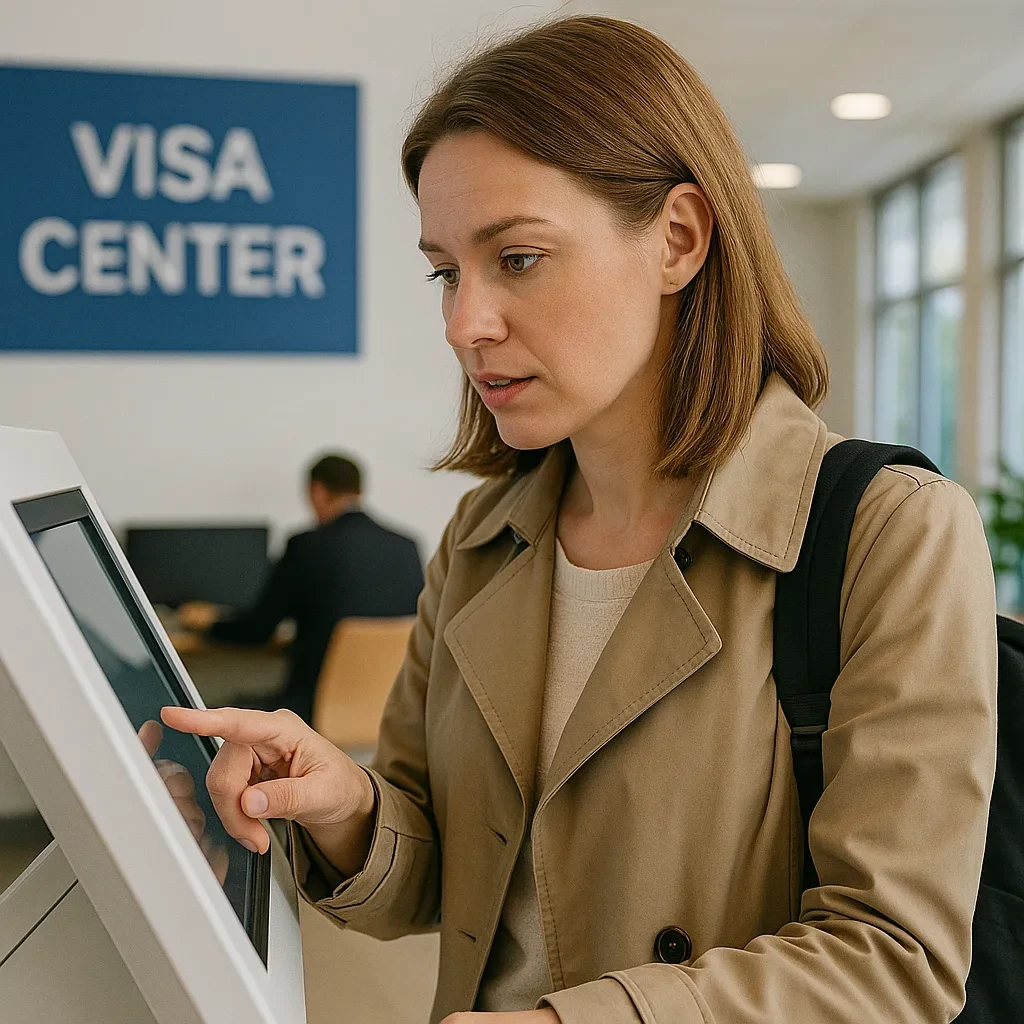
These days, obtaining a visa almost always involves a visa application center. For many countries, visa applications are no longer lodged directly at embassies; instead, accredited intermediaries handle document collection, biometric data, and passport logistics. It’s important to understand that a visa center is not the same as an embassy. Let’s explore how they operate and what makes them unique.
What Is a Visa Application Center?
A visa application center is a commercial entity accredited by a government to receive visa documents for a specific country. The best-known international operators are VFS Global, TLScontact, and BLS International. They act on behalf of embassies and consulates but do not decide on visa issuance.
If you’re applying for a visa to the UK, Schengen area, China, or Canada, you’ll most likely submit your documents via a visa center.
Core Functions of a Visa Center
The primary role of a visa center is to manage the technical submission process. Their duties include:
- Receiving your completed application and supporting documents;
- Scanning and uploading documents to the consulate’s system;
- Collecting biometric data (fingerprints, photo — see “Biometrics for Visas: What to Expect”);
- Forwarding passports and data to the consulate;
- Receiving the embassy’s decision and returning your passport with the visa.
Only the consulate decides whether to grant or refuse a visa. Visa center staff cannot influence the outcome.
Additional Services Offered
Beyond basic processing, visa centers often provide optional services:
- SMS notifications when your passport is ready;
- Courier delivery of your passport;
- On-site photo booths for quick visa-standard photos;
- Assisted application completion by center staff;
- Document printing and copying;
- Premium lounges (expedited service, personal assistant, refreshments);
- Dedicated biometric booths.
All these extras come at an additional fee and are entirely optional.
How a Visa Center Differs from a Consulate
It’s easy to confuse visa centers with consulates, but their roles are very different:
| Visa Center | Consulate |
|---|---|
| Accepts applications and biometrics | Reviews and decides on visas |
| Provides technical services | Conducts interviews and adjudicates applications |
| Commercial entity | Government diplomatic office |
| Cannot access refusal reasons | Issues the final decision |
🔹 Visa centers do not grant or refuse visas; they only facilitate document submission.
Country Examples
- UK: All applications go through VFS Global, which collects documents and biometrics before sending them to the British consulate. See our UK country page for details.
- Schengen area: Most EU countries (Germany, France, Spain, etc.) handle applications via VFS Global or TLScontact. See our Schengen visa page for specifics.
- USA: Applicants book interviews directly with the embassy, but biometrics are taken at an official US Visa Application Center, which is part of the diplomatic mission, not a private company.
What to Know Before Visiting
Before you go to a visa center:
- Book your appointment online in advance;
- Confirm exactly which documents to bring and make copies;
- Arrive early, especially for biometrics;
- Review the center’s services and decline any paid options you don’t need;
- Check passport pickup times, which vary by country and visa type.